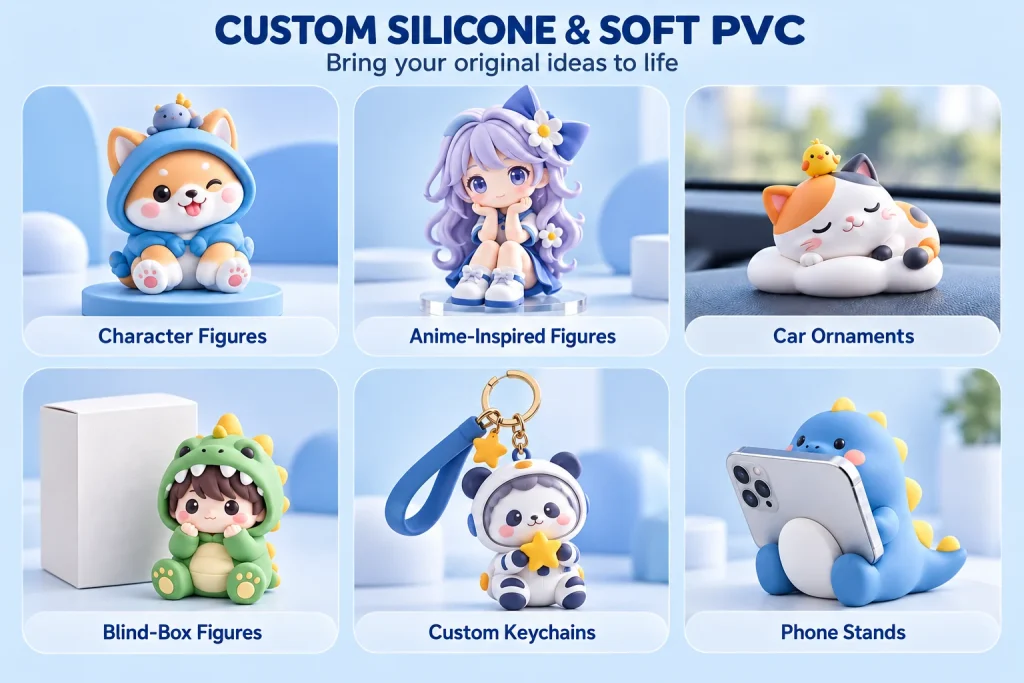
Small details can change the whole expression of a custom silicone figure. Eyes, blush and a smile may be easier to reproduce through printing after the silicone body is molded. A raised, two-color apparel logo may call for a molded base followed by carefully dispensed colored silicone. The right route depends on the appearance the buyer wants, the material and the approved sample.
This guide compares those two finishing routes using the production examples our team discussed. It is written for brands and product teams preparing original artwork for a custom silicone product, figure or logo patch.
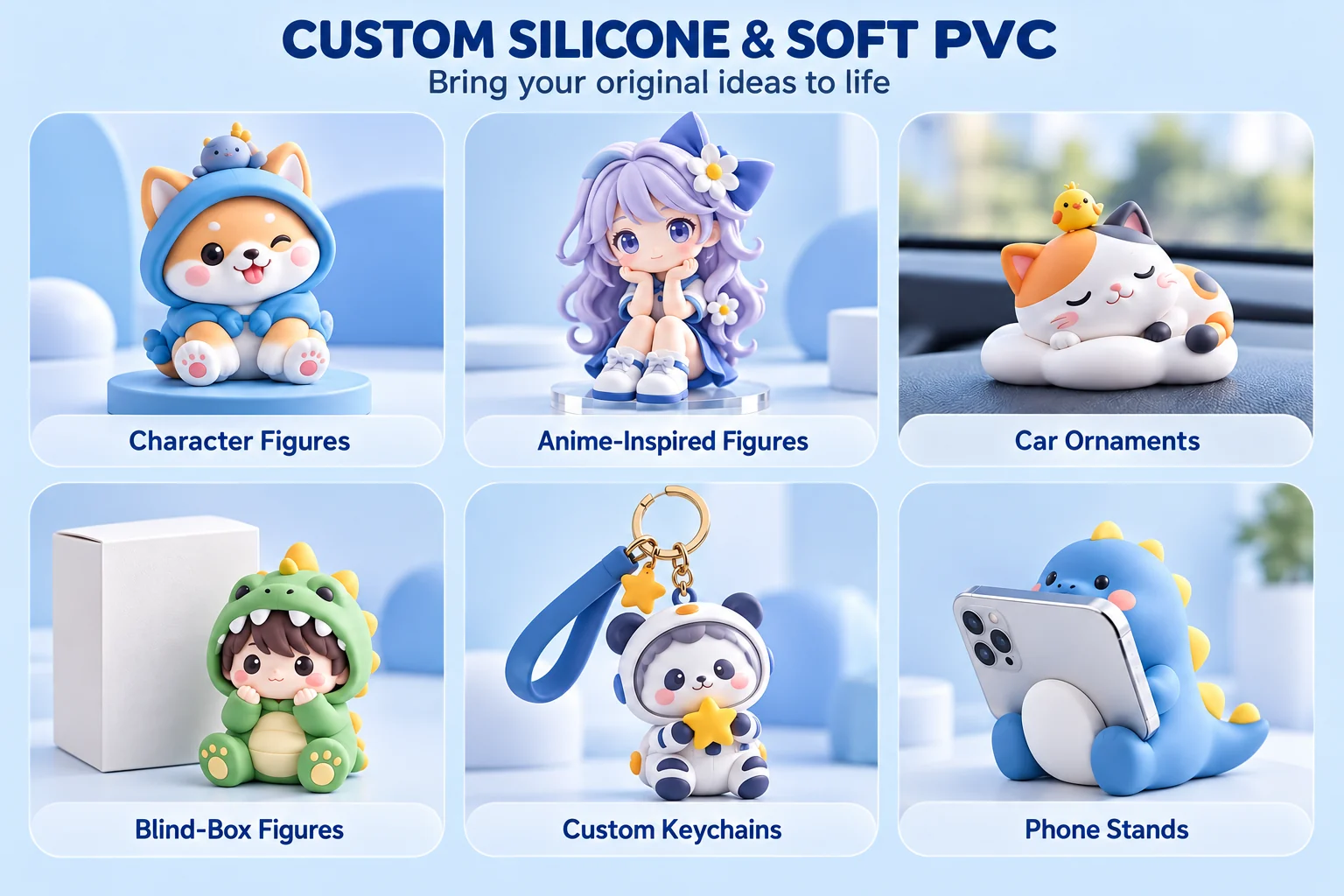
Start with the molded silicone body
In the workflows described here, the main shape is made first. For a figure, molding establishes the silhouette and three-dimensional features. For a two-color garment logo, a solid silicone compound can be compression molded and heat cured to form a black base. The remaining artwork then determines whether fine details are better printed or filled with another color of silicone.
The choice should be made against the final size. A face that looks clear on a large drawing can lose definition on a small figure. A logo that needs a noticeable raised color area has a different requirement from a flat graphic.
When printing suits a custom silicone figure
Printing can complete fine facial details after the molded body is ready. Eyes, blush, eyebrows and multi-color expressions are typical examples. When the design and material are suitable, the figure can be molded as one body and then sent to the printing stage. This can make a repeated design more efficient in batch production than building each small color area through dispensing.
Printing still needs an approved sample. Check whether facial features sit in the intended position, whether colors look right on the cured silicone, and whether the printed finish performs as required for the product’s intended handling. The specific printing method and material compatibility should be confirmed for each project rather than assumed from the artwork alone.
When color filling suits a molded silicone logo
Consider a garment logo with a black base and red lettering. One possible route is to compression mold the black base from solid silicone compound, then dispense colored liquid silicone material into the letter areas and heat cure it. The finished design combines molded shape with a distinct colored detail.
This route is useful when the artwork calls for a filled or raised color area that forms part of the product’s physical surface. The dispensing path, boundaries between colors and cured appearance should be judged on a sample. It adds production work beyond molding the base, so it may affect the schedule differently from printing.
Printing or color filling: what should the artwork specify?
| Buyer decision | Printing after molding | Silicone color filling after molding |
|---|---|---|
| Visual goal | Fine lines, facial expressions, blush and multiple small color details. | Distinct filled color regions or a tactile, raised detail. |
| Example | Eyes and expression on a custom character figure. | Red letters on a molded black silicone apparel logo. |
| Sample review | Placement, sharpness, color and finish under intended use. | Color boundaries, relief, cured surface and consistency. |
| Planning point | Confirm the suitable print process and material compatibility. | Allow for dispensing and an additional curing stage where required. |
These are design routes, not fixed rules for every silicone or soft PVC item. The final choice is made after reviewing the actual geometry, artwork and sample.
What a 5,000-piece example says about production time
For one figure design discussed with our production team, molding plus printing for 5,000 pieces could take about three days, while molding plus color dispensing could take about seven to ten days. This is an example for comparing process steps, not a promised lead time. Tooling, artwork complexity, the number of colors, sample revisions, inspection and the production schedule all affect a real quotation.
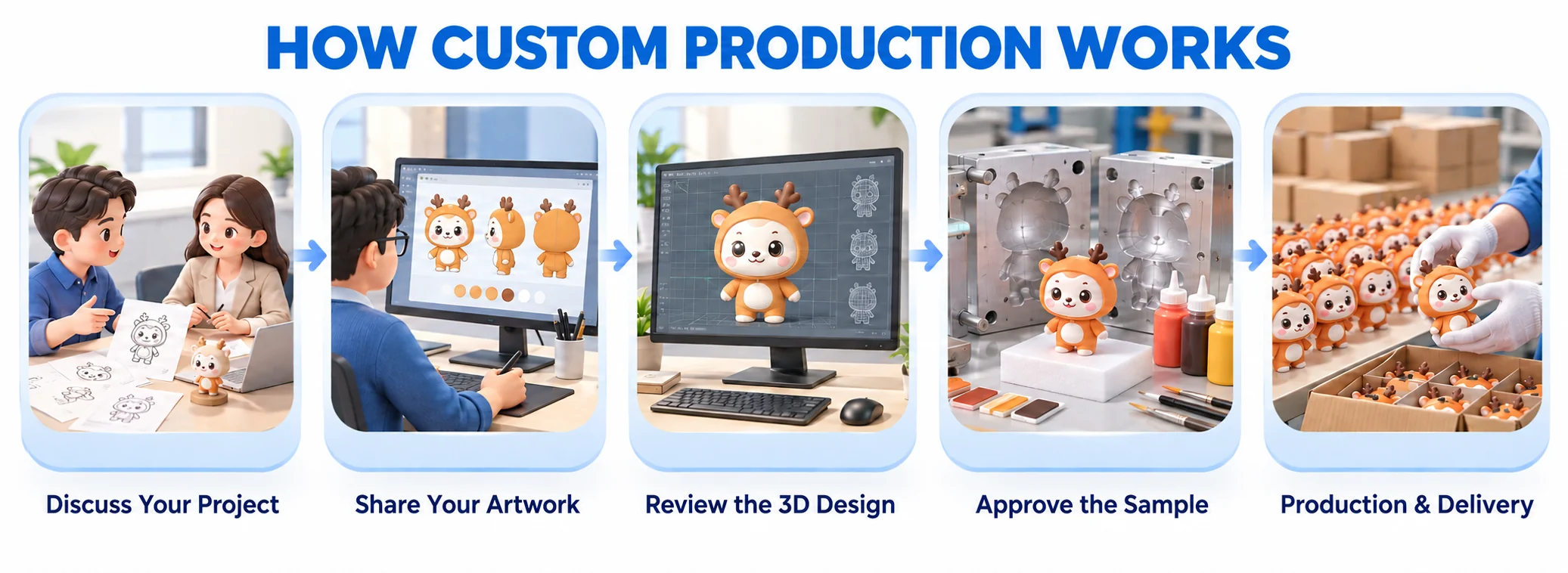
When timing matters, send the intended quantity and the required finish together. A short description such as “three-color face, printed after molding” or “raised red lettering on a black silicone base” gives the manufacturer a better starting point than a picture alone.
What to send before requesting a quote
- Original artwork or a design you are authorized to use, including a front view and any important side details.
- Finished size, expected quantity per design and per colorway, and the intended use.
- Which details should look flat and fine, and which should be visibly raised or filled.
- Color references, surface finish, packaging needs, delivery destination and desired date.
Approve the sample against the same artwork revision used for the quotation. Record any changes to face placement, lettering, color boundaries or relief before production proceeds. For color-matching and molding fundamentals, see our multi-color silicone molding guide.
Frequently asked questions
Can printing and color filling be combined on one product?
They may be considered together if the design needs both fine printed details and a raised filled area. The sequence and compatibility must be confirmed on a sample for the selected material.
Is printing always faster than dispensing?
No fixed lead time applies to every design. Printing can be more efficient for many small repeated details, while artwork complexity, setup, sample approval and production capacity can change the result.
Does the same process apply to soft PVC figures?
Soft PVC is a different material system. Send the intended material and design so the finishing route can be reviewed specifically for that product.
Discuss your silicone project
We can review an original figure, apparel logo patch or other silicone design and identify what needs to be confirmed before sampling. See our silicone manufacturing service or send your project details for a quotation.