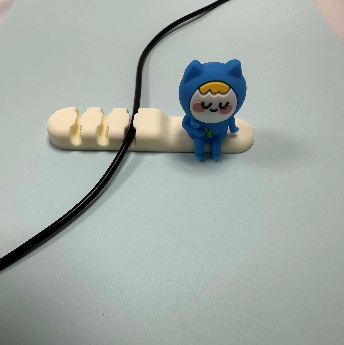
Turning a character illustration into a figure you can hold starts with a few practical questions: How complex is the shape? How many colors and fine details are needed? What is the target quantity? Soft PVC color dispensing, silicone molding and PVC injection molding can all be used for custom figures, but they differ in how the material is formed, when color is added, and how much tooling and finishing may be required.
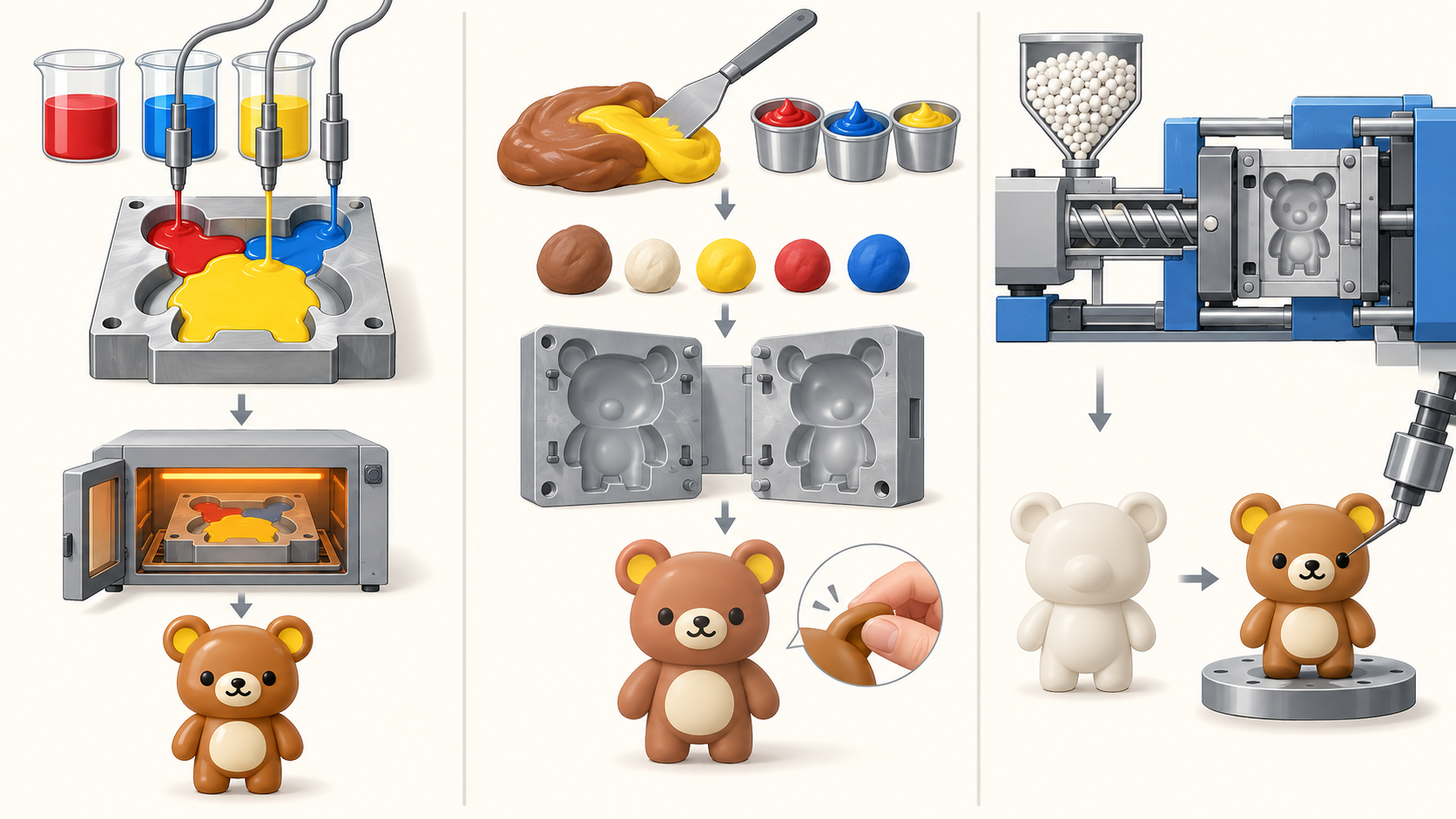
What are the three processes?
Soft PVC color dispensing uses a flowable PVC plastisol or paste. Colors can be prepared before production and dispensed into designated areas of the mold. Heat then forms the material into the part. The method can work well for figures with clear outlines, defined color zones and some raised detail. A complex three-dimensional figure may still need multiple parts, bonding and touch-up; it is not necessarily completed in one dispensing step.
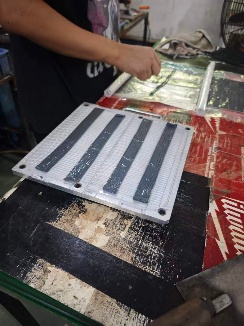
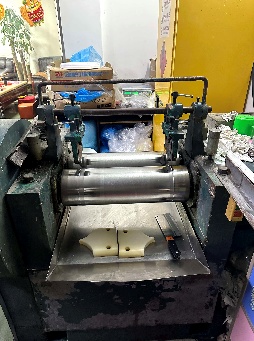
Silicone molding may use compounded silicone rubber or liquid silicone, depending on the design and production route. For some character projects, color masterbatch is mixed into the silicone compound before molding. Different parts can be prepared in different colors, molded, cured and assembled. Suitable designs can also receive local color filling after molding. The right approach depends on shape, feel, color requirements, tooling and order size.
PVC injection molding typically heats and plasticizes PVC pellets or a prepared compound, injects the material into a mold and cools it into shape. For complex three-dimensional figures, a steel mold can be engineered with multiple parts, EDM (electrical discharge machining) and other tooling details to address features such as undercuts. A common multicolor approach is to mold a base-color part first, then add paint or printing for facial and surface details. PVC can also be pre-colored, so post-painting is not mandatory for every injection-molded part.
When is color added?
One of the main visual differences is when the color becomes part of the product.
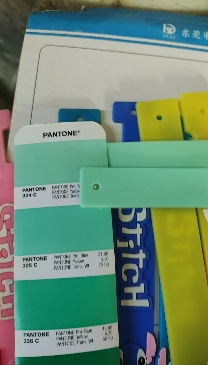
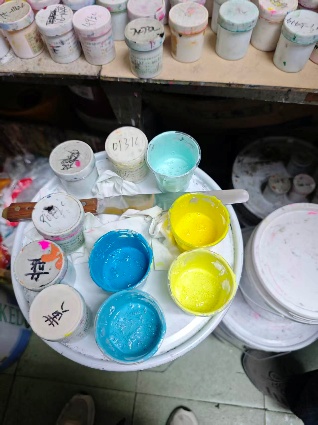
With soft PVC color dispensing, colors can be mixed before dispensing and placed directly into specified mold areas. Where the design is suitable for this process, areas such as the eyes, clothing and accessories can be formed as distinct color zones.
With silicone figures, the head, body, hands and feet can be prepared in separate colors before molding and assembly. Very small or fine details may still require printing or local color filling; material color alone cannot be assumed to reproduce every detail.
With PVC injection molding, pre-colored material can provide the base color. Gradients, shadows, small facial expressions and other complex multicolor effects often require additional finishing, such as spray painting or pad printing. Compare color boundaries, detail size, surface appearance and finishing durability together—not just the number of colors.
Example: choosing a process for a four-part character
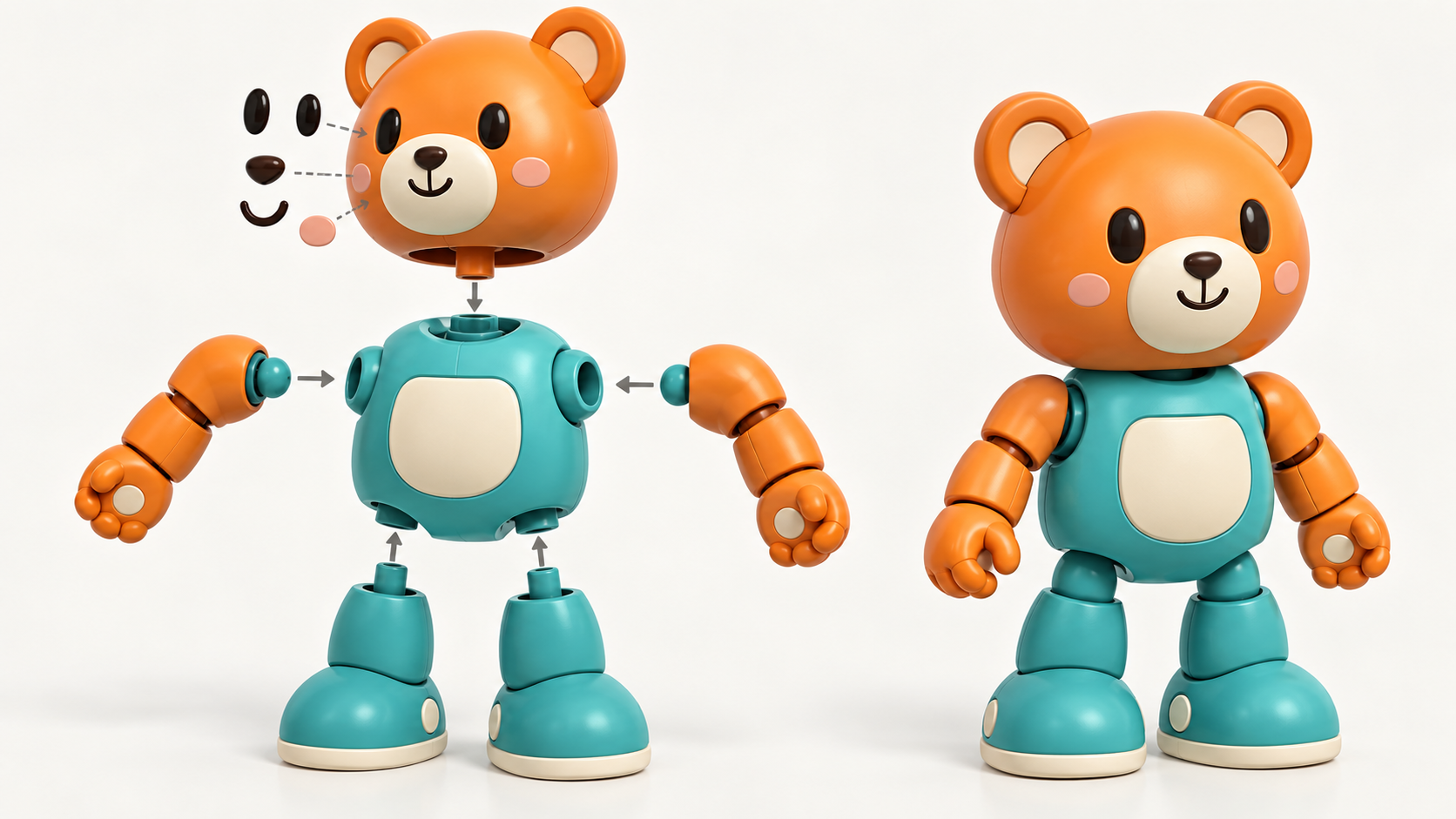
Imagine a character whose head and hands use one color and whose body and feet use another. The head, hands and feet need to connect to the body. For a project of roughly 2,000–5,000 pieces, the first questions are whether each part can be released from the mold, whether the joints will be secure, whether visible seams are acceptable, and how fine the facial details must be.
If the shape is relatively simple, the number of parts is manageable and the colors can be prepared before molding, soft PVC or silicone with a copper- or aluminum-mold option may be worth evaluating for small-batch sampling and production. The head, hands and body can be molded in their respective colors and then bonded or assembled. The aim is to form large color areas in the material and during molding where practical—not to promise that every design avoids painting.
If the character has deep undercuts, many intricate three-dimensional layers or fine accessories—or if the design calls for a high level of structural detail—steel-mold PVC injection may be worth assessing. It offers more engineering options for complex structures, but tooling, assembly, painting and printing must all be included in the project budget. Even with injection molding, a design may need to be revised or divided into several parts; no process guarantees a perfect one-to-one reproduction without trade-offs.
Tooling cost and unit price: compare the whole project
In some of our past custom-character projects, tooling for a PVC injection-molded design that was not exceptionally complex started at around US$2,000, while more involved projects reached US$3,000 or more. In comparable small-batch projects, tooling for soft PVC or silicone has sometimes been about one-third to one-quarter of the steel-mold injection option. These are project examples, not fixed market prices. A quote depends on mold material, product size, cavity count, parting and assembly plan, undercuts and expected mold life.
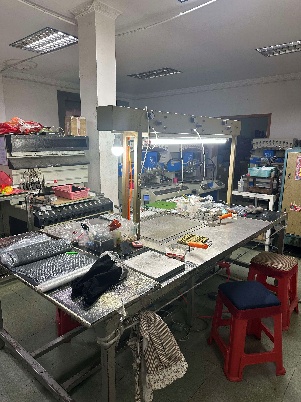
Unit cost also depends on more than the material. Multicolor dispensing labor, silicone curing time, post-molding painting or printing, the number of bonded parts, yield and order size can all change the cost per piece. Soft PVC or silicone may be economical for some designs, while higher injection tooling investment may be offset by production efficiency at larger volumes. The most useful comparison is a like-for-like estimate using the same design, quantity and acceptance criteria, covering tooling + production + finishing + assembly.
A quick guide for designers and buyers
- For clear color zones, moderate structure and a smaller first order where tooling investment matters, evaluate soft PVC dispensing or silicone molding.
- If a soft feel, elasticity or silicone material is a firm requirement, start by evaluating silicone.
- For highly complex structures, deep undercuts and fine details that need extensive engineering, evaluate PVC injection molding if the tooling budget allows.
- Confirm material testing and target-market requirements before sampling, especially if the product may be used by children. A material name alone does not establish compliance.
For a useful quotation, provide front, side and back views; finished dimensions; target quantity; color or Pantone references; desired feel; acceptable parting lines and bonding locations; and any painting, printing, hardware or packaging requirements. This gives the factory a basis for recommending a part breakdown and process before the sample is made.
Bottom line: Soft PVC dispensing or silicone can be flexible options for many relatively simple custom characters, especially when managing small-batch tooling is important. For figures with particularly complex structures, PVC injection molding deserves a closer look. The right choice depends on the design, quantity, colors, tooling budget and finished-product criteria.
日本語版: オリジナルキャラクターフィギュアの製法比較